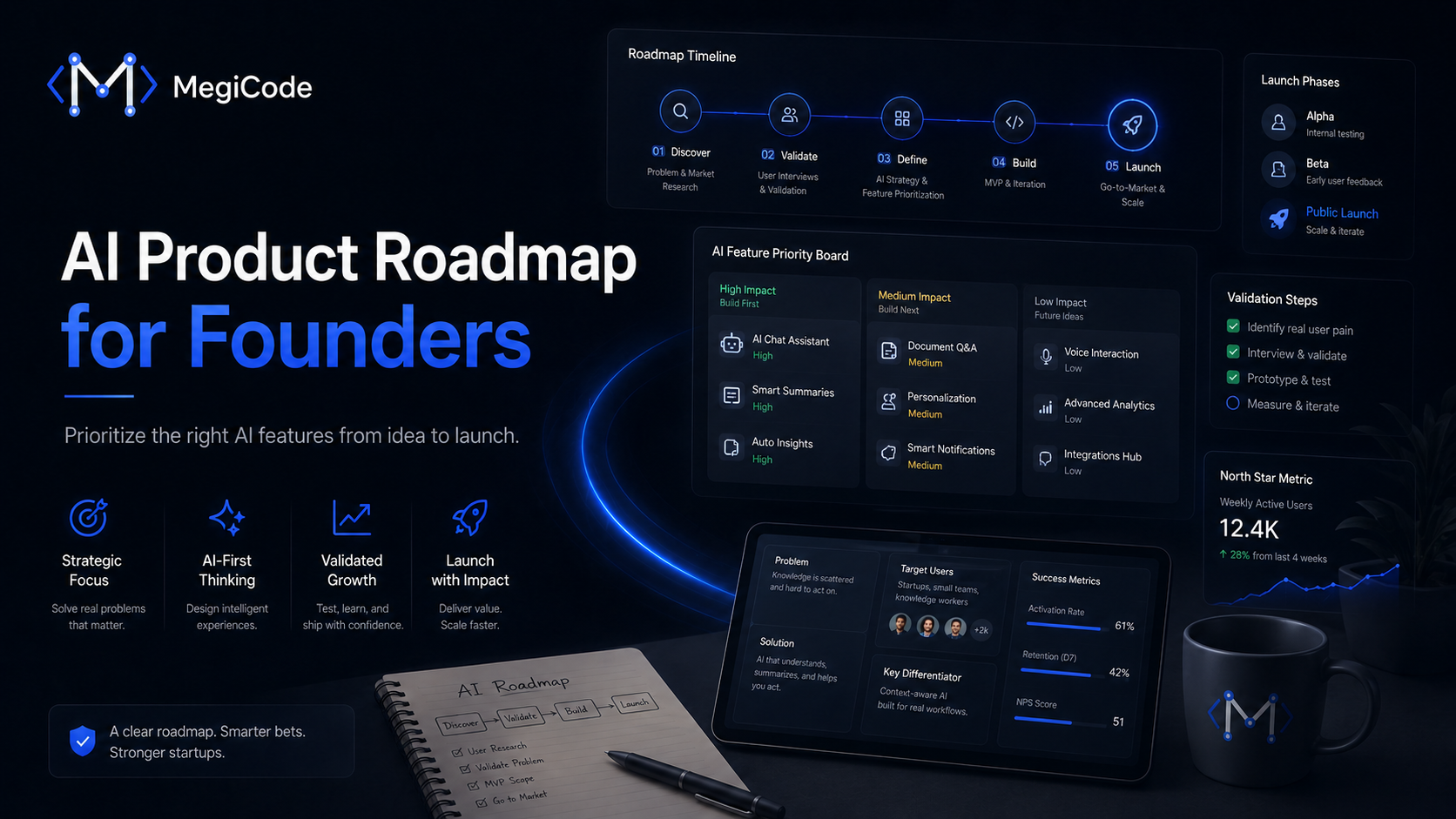
Executive takeaway: AI ideas become expensive when founders build features without a roadmap, validation plan, or success metric. The winning approach is to design around a clear AI product roadmap from discovery to launch with staged feature priorities and make every feature, screen, integration, and metric support that outcome.
Megicode builds AI-powered software, SaaS platforms, mobile apps, automation systems, cloud foundations, dashboards, and growth-focused digital products for startups, founders, and growing businesses. This article is written for non-technical founders and early-stage startup teams who want practical clarity before investing development budget.
Why this topic matters for Megicode clients
Most software projects do not fail because the team cannot write code. They fail because the problem is not sharp enough, the first version is too large, the user journey is unclear, or the product does not connect to a measurable business result.
For AI product roadmap, the real question is not “Can this be built?” The stronger question is: Should this be built now, what should be included first, and how will the business know it worked? That is why this guide focuses on strategy, implementation, ROI, user psychology, and practical execution.
The Megicode point of view is simple: the best software is not just functional. It should be useful, scalable, secure, easy to understand, and designed to help the business win. For this topic, that means building toward a clear AI product roadmap from discovery to launch with staged feature priorities instead of chasing random features.
Principles of SaaS Product Roadmap Design for AI
Developing an AI product roadmap requires a shift in traditional SaaS product roadmap design. Because machine learning models are non-deterministic, your roadmap must account for dataset preparation, prompt engineering iterations, and model evaluation stages, alongside typical software engineering milestones.
Best-fit readers
This guide is especially useful for:
- Startup founders who need a clear build plan before spending serious budget.
- Non-technical founders who want to understand what a development partner should actually deliver.
- Service businesses, agencies, clinics, education platforms, real estate teams, e-commerce teams, or SaaS teams that need better systems.
- Operators who want fewer manual workflows, better dashboards, and more reliable customer experiences.
- Teams comparing software vendors and trying to avoid overbuilding, underbuilding, or choosing the wrong stack.
The business problem behind the search keyword
People searching for “AI product roadmap” usually have a business problem underneath the technical phrase. They may be trying to reduce cost, increase conversions, automate a slow workflow, improve customer experience, launch faster, or replace disconnected tools.
The hidden buyer psychology is certainty and strategic control before spending. A founder does not only want an article; they want confidence. They want to know whether the idea is worth building, which features matter first, what risks to avoid, how much complexity is required, and whether the final product can create real ROI.
A strong content page should therefore do more than define the topic. It should help the reader make a better decision and naturally show why Megicode is a strong partner for implementation.
The Megicode framework for building this correctly
Megicode’s recommended approach is to treat every software initiative as a product system. That means combining business thinking, UX, architecture, development, analytics, security, and growth.
| Stage | What happens | Why it matters |
|---|---|---|
| Discovery | Define users, pains, goals, workflows, and constraints. | Prevents building features that do not matter. |
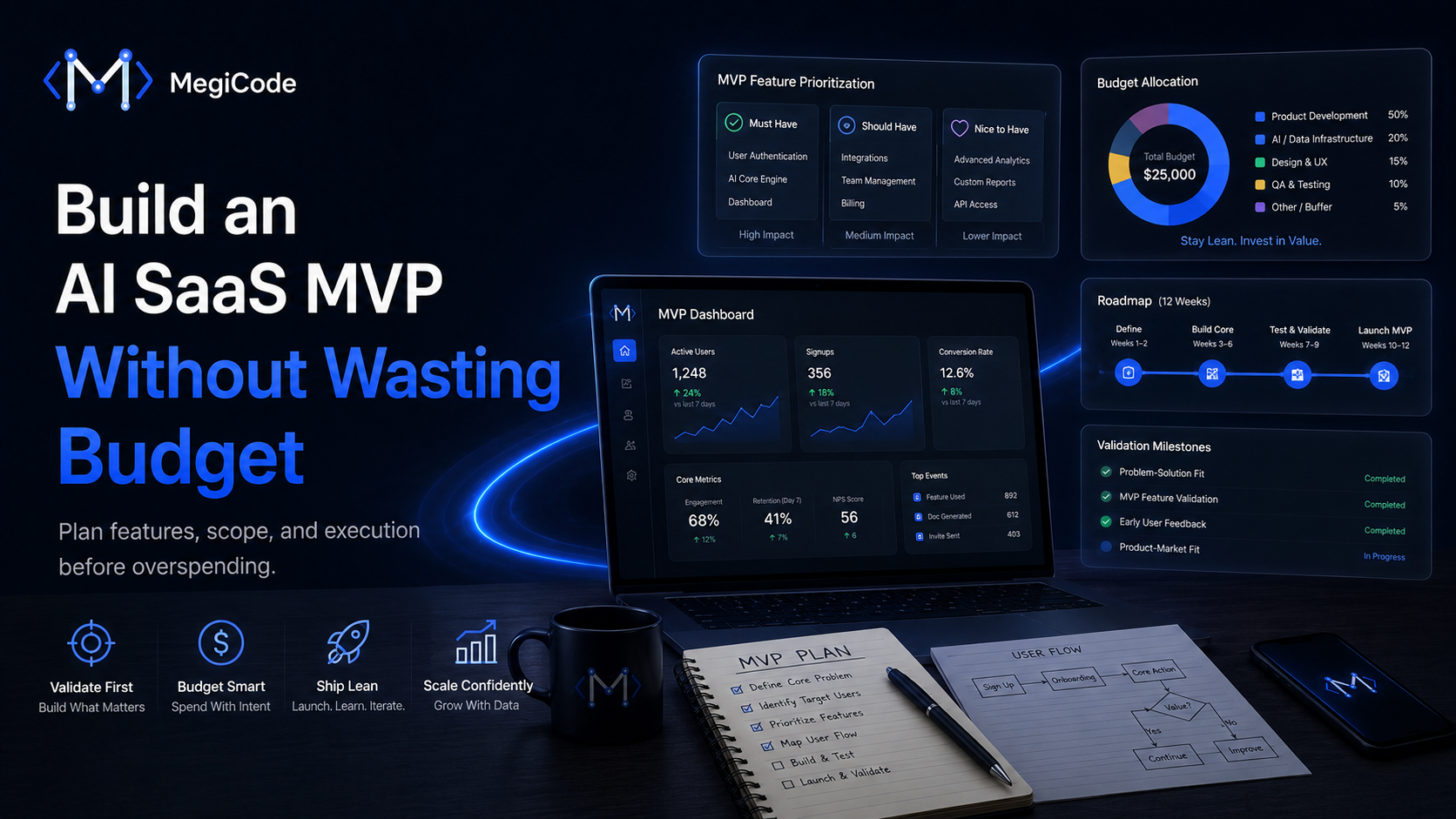
| Scope | Separate must-have, should-have, and later-stage features. | Protects budget and speeds up launch. |
| UX & Flow | Design screens, states, onboarding, and decision moments. | Helps users understand value quickly. |
| Architecture | Plan data, integrations, security, deployment, and scale. | Reduces rework and technical debt. |
| Build & Launch | Develop, test, monitor, and release in controlled stages. | Turns strategy into a usable product. |
| Improve | Track data, learn from users, and iterate. | Builds compounding product advantage. |
What the first version should include
The first version should not be the biggest possible product. It should be the smallest version that can prove value while still feeling credible and professional. For this topic, that usually means:
- A clearly defined user workflow connected to a clear AI product roadmap from discovery to launch with staged feature priorities.
- A sharp MVP scope with must-have, should-have, and later-stage features separated before development.
- A simple UX flow that reduces confusion and makes the value obvious in the first session.
- Analytics and success metrics so the team can measure usage, conversion, quality, and ROI after launch.
- A technical foundation that supports security, integrations, maintainability, and future scaling.
The first release must be narrow enough to build efficiently, but complete enough to support a real user journey. A half-built experience creates doubt. A focused but polished experience builds trust.
Decision questions before development
Before writing code, answer these questions clearly:
- What user problem is painful enough that someone will care today?
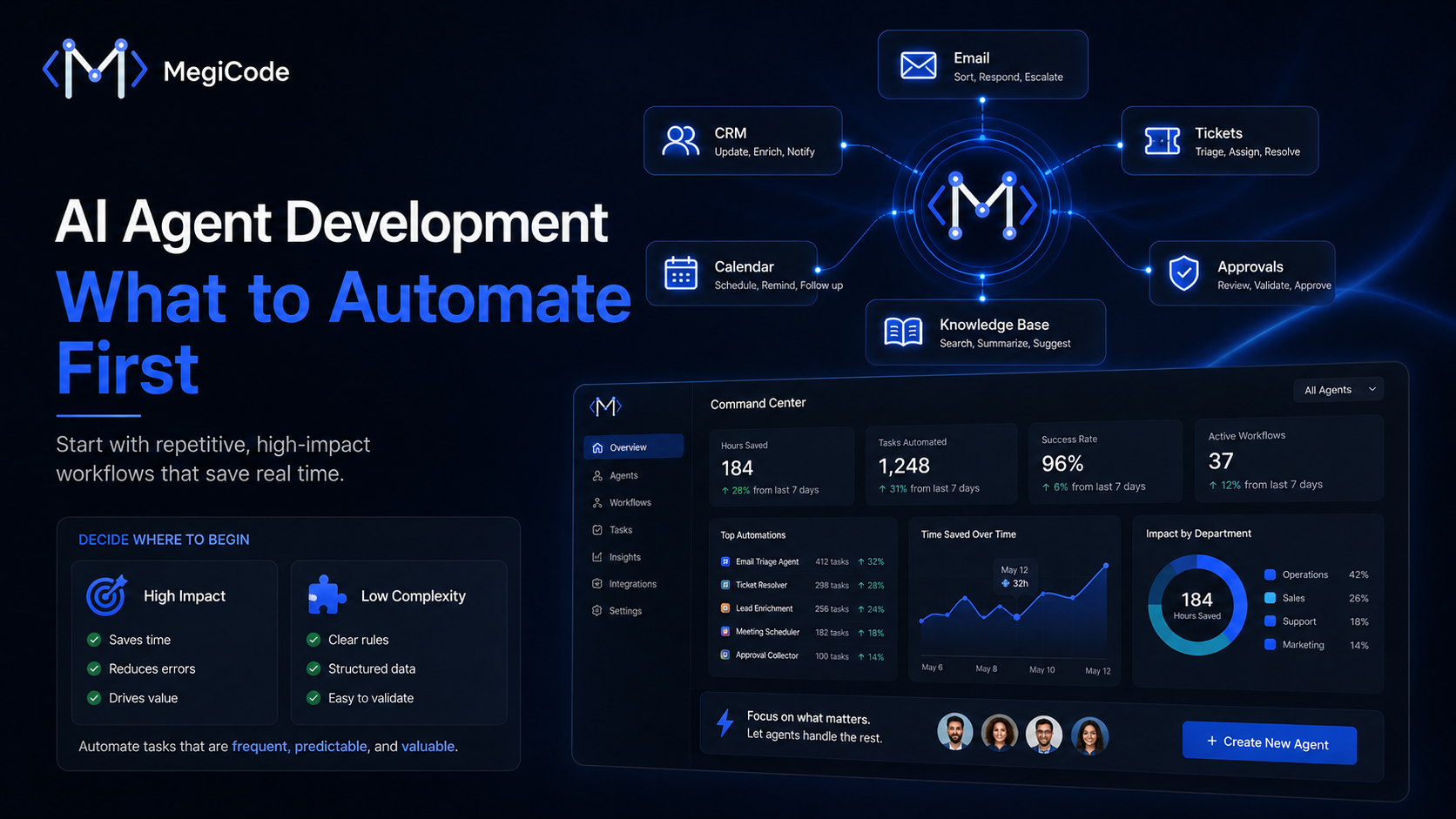
- Which workflow repeats often enough to justify software or automation?
- What can be shipped in the first version without weakening the core value?
- Where could failure create user frustration, operational risk, privacy issues, or wasted budget?
- Which metric will prove this investment is working after launch?
These questions expose whether the project is ready for development or still needs product strategy. If the answers are vague, the scope will expand later. If the answers are sharp, the project can move faster.
Practical implementation plan
Discovery
Clarify the audience, pain point, business model, current workflow, and measurable success criteria.
Experience Map
Convert the idea into user journeys, screen flows, data touchpoints, and decision moments.
Technical Blueprint
Choose the stack, integrations, data model, security rules, deployment flow, and monitoring approach.
Build the First Useful Version
Ship the smallest version that proves value while still feeling professional and reliable.
Measure and Improve
Track behavior, identify friction, collect feedback, and iterate based on evidence rather than assumptions.
What Megicode would pay special attention to
For this specific topic, the most important execution details are:
- Workflow clarity — the product should match how the user actually works, not how the team imagines they work.
- Clean UX states — empty states, loading states, errors, permissions, onboarding, and confirmations must be designed intentionally.
- Data quality — automation, AI, analytics, and dashboards only work when the underlying data model is clean.
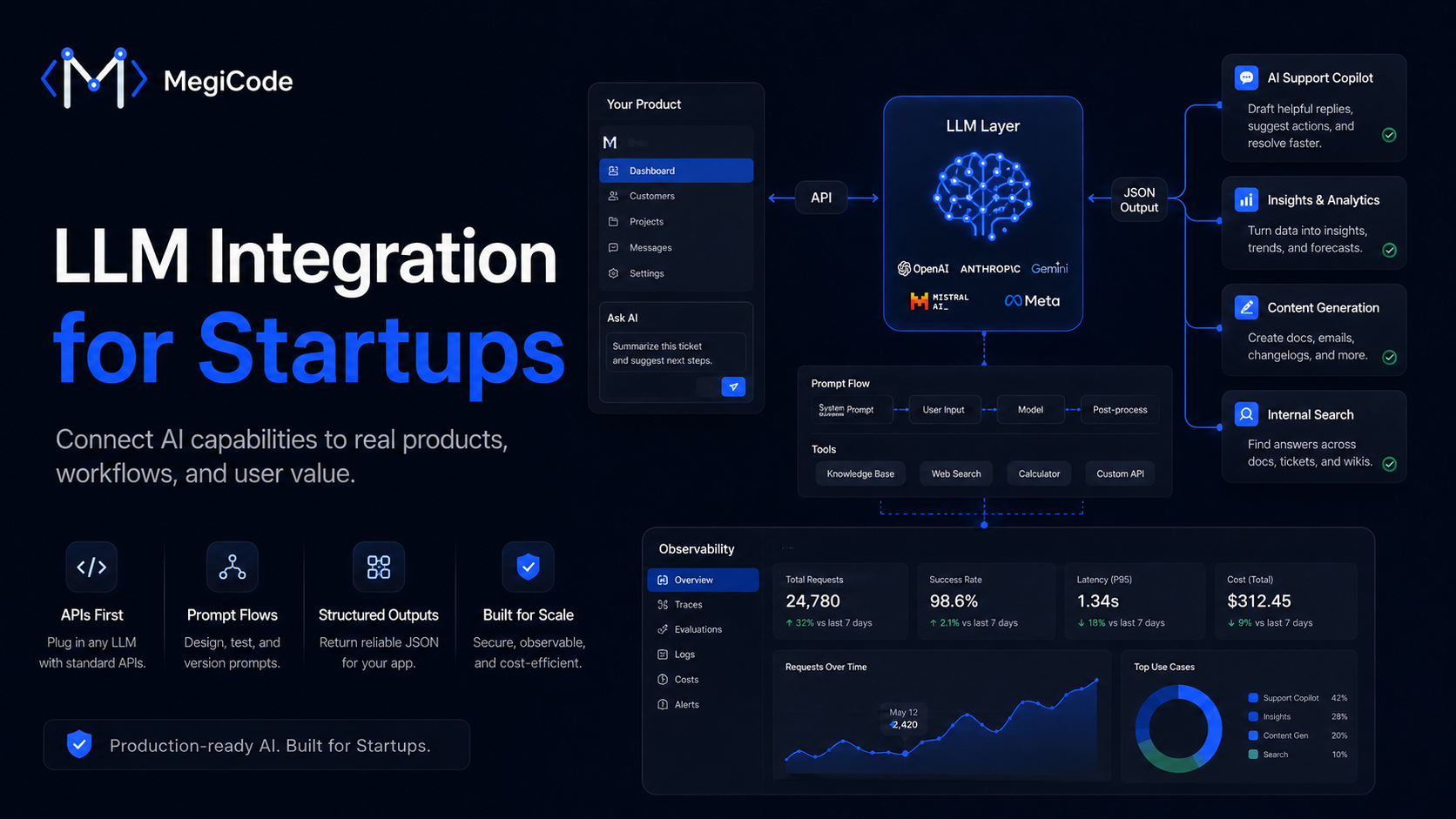
- Integration reliability — CRM, payment, calendar, messaging, AI model, API, or database integrations need logging and fallback behavior.
- Security and trust — authentication, role permissions, data access, audit trails, and privacy decisions should be planned early.
- Post-launch measurement — the team should know exactly which metrics show progress, adoption, conversion, quality, and ROI.
ROI signals to track
A good software investment should create measurable value. Depending on the project, Megicode would usually track:
- More qualified inquiries, bookings, trials, or demos from the same traffic.
- Less manual work for founders, operators, sales teams, support teams, or administrators.
- Faster decision-making because the right dashboard and alerts are available.
- Higher trust because users understand the product, see progress, and receive better communication.
- Lower rework cost because architecture, UX, and scope decisions are made intentionally.
The point is not to track every number. The point is to choose the few numbers that show whether the product is making the business stronger.
Common mistakes to avoid
- Starting with features before defining the business outcome.
- Copying competitors without understanding the buyer journey or user psychology.
- Building the largest version first instead of validating the smallest useful workflow.
- Ignoring data structure, admin visibility, security, and analytics until the end.
- Treating launch as the finish line instead of the beginning of iteration and growth.
These mistakes are expensive because they usually appear late: after designs are approved, after development starts, or after launch. The best time to prevent them is during planning.
A stronger page experience for readers
For Megicode’s website, this article should not be published as a plain wall of text. To maximize traffic, trust, and conversion, format the page with:
- A strong hero section using the blog image and a clear one-line promise.
- A sticky table of contents on desktop.
- Short paragraphs and bold decision points for skimmers.
- Visual callout boxes for “Founder takeaway,” “Common mistake,” and “Megicode recommendation.”
- A mid-article CTA offering a useful next step, not a generic “contact us.”
- Internal links to related service pages and project case studies.
- A final conversion section that explains exactly what the reader gets from booking a call.
Where Megicode fits
This topic connects directly to Megicode’s work in AI Product Development: AI/ML strategy, LLM integration, RAG systems, AI agents, model workflows, and production-ready AI software.
A strong partner should not simply accept a feature list and start coding. The right partner should challenge assumptions, protect the budget, simplify the first release, design a clean user experience, and build with enough technical depth to support future growth.
That is the difference between hiring a developer and working with a product-focused technical partner.
Final recommendation
If you are planning AI product roadmap, do not start with the biggest possible version. Start with the clearest business outcome, the most valuable user workflow, and the smallest release that can prove real demand.
Megicode can help you turn this into a practical plan, clean product experience, scalable architecture, and launch-ready build.
CTA: Book a AI Product Roadmap Session with Megicode and get a practical next-step plan for your product, platform, or automation idea.
Frequently asked questions
The main goal is to solve a specific business problem, not simply add technology. For ai startups, the useful outcome is a clear AI product roadmap from discovery to launch with staged feature priorities.
Start by mapping the user workflow, defining the smallest valuable release, choosing the right technical approach, and setting success metrics before development starts.
Avoid building too many features, ignoring user feedback, skipping analytics, leaving security until later, and choosing tools without understanding long-term maintenance.
Megicode can turn the idea into a practical plan, product scope, user experience, technical architecture, and launch-ready implementation through a focused AI Product Roadmap Session.
Invest when the workflow is repeated often, connected to revenue or operational efficiency, painful enough for users, and measurable after launch.